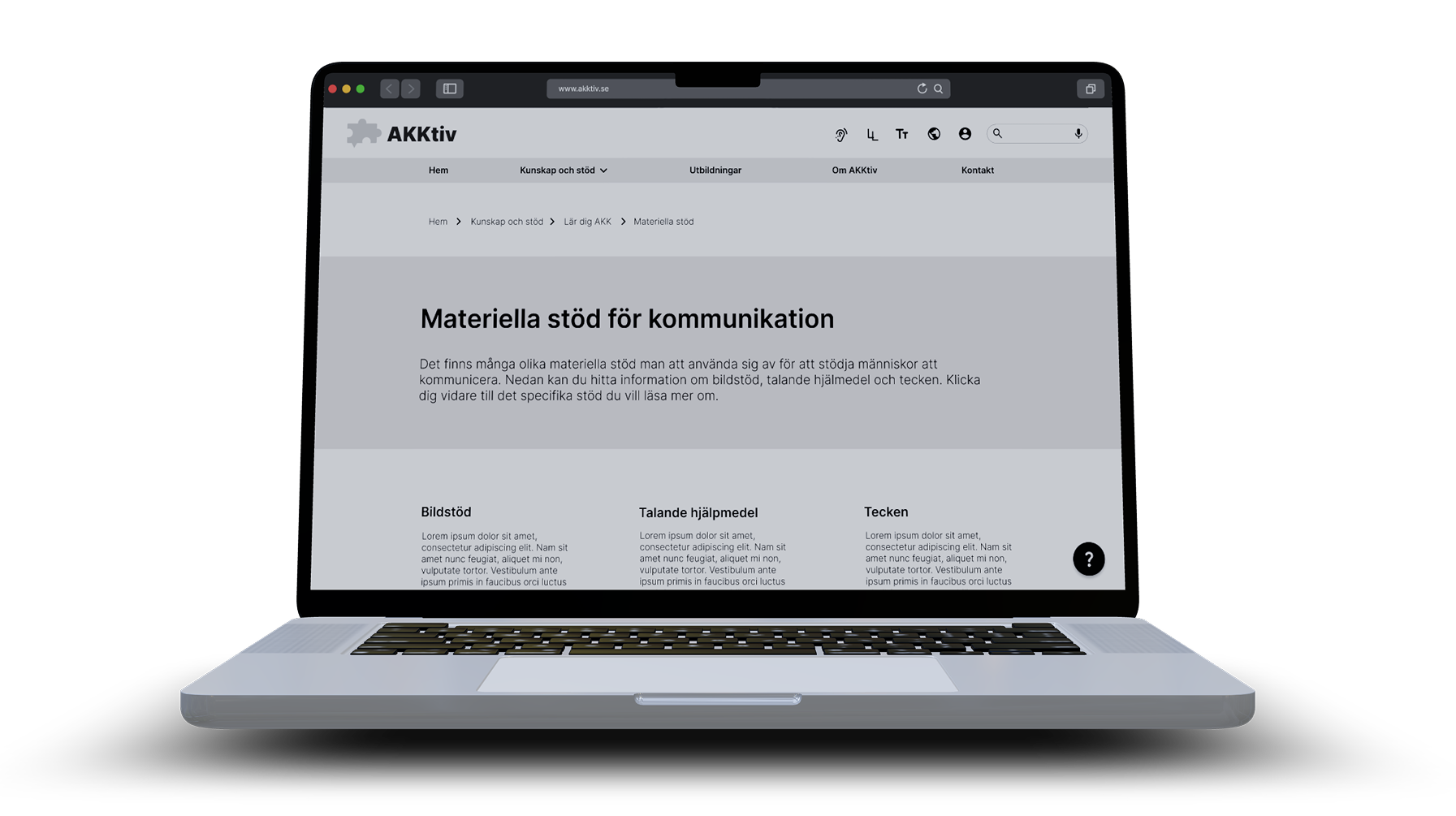
A website that educates about how to support individuals with communication difficulties
Kulturlabbet
Bringing culture to life — for everyone. • 6 min read
Bouncing Image Arrow
01. OVERVIEW
Kulturlabbet is a cultural center open to young people aged 13–25 — a creative space to explore, meet others, and just hang out. Our project began with their request for clearer communication and ways to better connect with their audience.
Through early research and conversations, we uncovered a bigger vision: to make culture more accessible, relevant, and engaging for more young people.
This was a team project with 5 members, where I shared the project lead role alongside a teammate — contributing to planning, coordination, research, and design throughout.
Role
Tools
Team
UX/UI UX Research Service Designer
Figma PowerPoint Procreate Miro
Martina Q. Emma H. Team member 3 Team member 4 Team member 5
02. RESEARCH
One key challenge Kulturlabbet faced was engaging the older segment of their audience — especially people aged 18 to 25, who often didn’t feel as connected to the space.
To better understand the needs, interests, and barriers for this group, we conducted a series of informal interviews. Each team member interviewed 1–2 individuals within the target age range, focusing on their habits, cultural interests, and how they perceive spaces like Kulturlabbet.
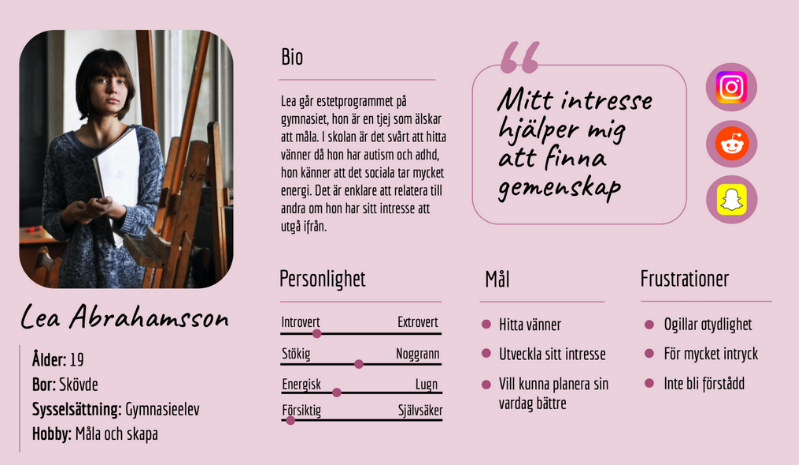
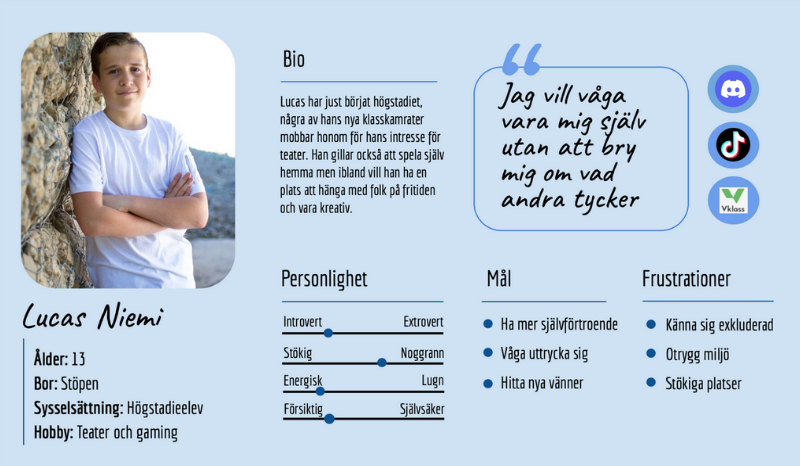
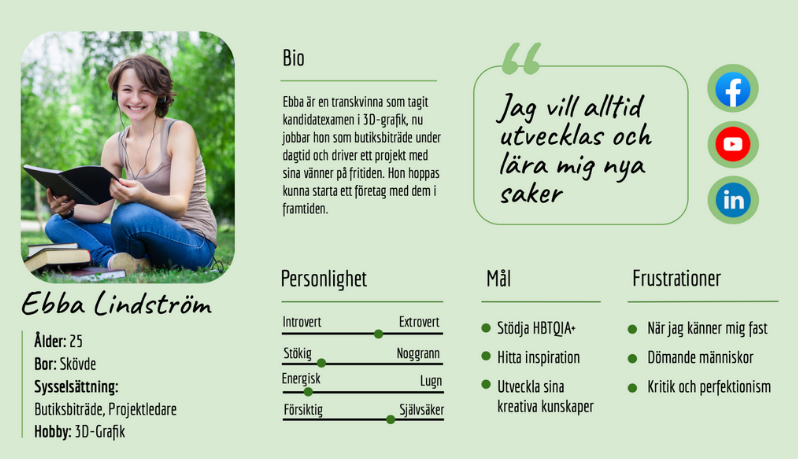
From these insights, we created a set of personas representing different types of users within the 13–25 age group. These personas helped guide our design decisions and communication strategies to better appeal to the full spectrum of Kulturlabbet’s audience.
03. DESIGN
With a clear understanding of users’ goals and challenges, the next step was to translate those insights into actionable design solutions for AKKtiv’s website.
Ideation & Exploration
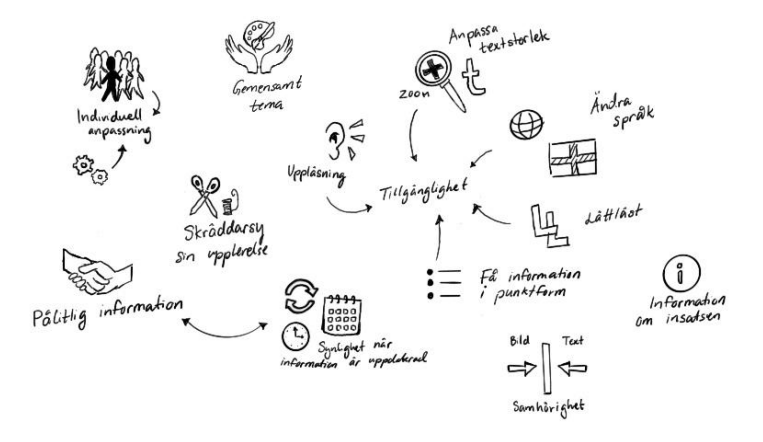
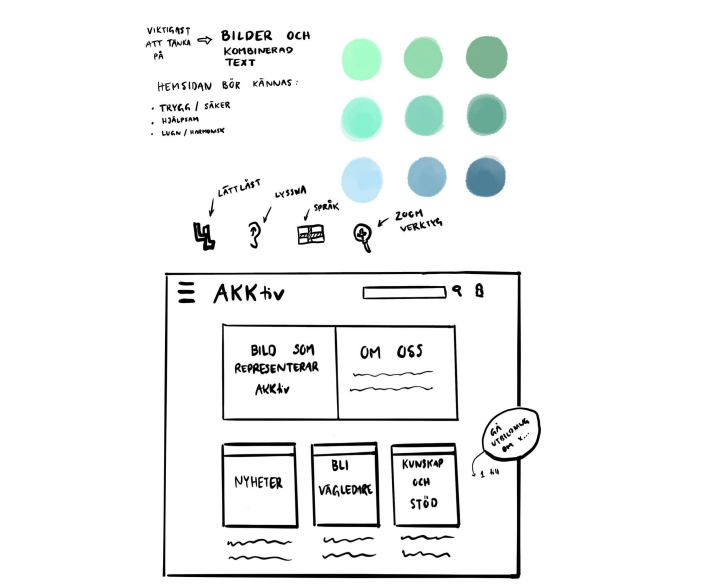
I began with a brainstorming session to generate ideas aligned with user needs and the project’s goals. This helped surface multiple directions before narrowing in on the most viable ones.
Sketching
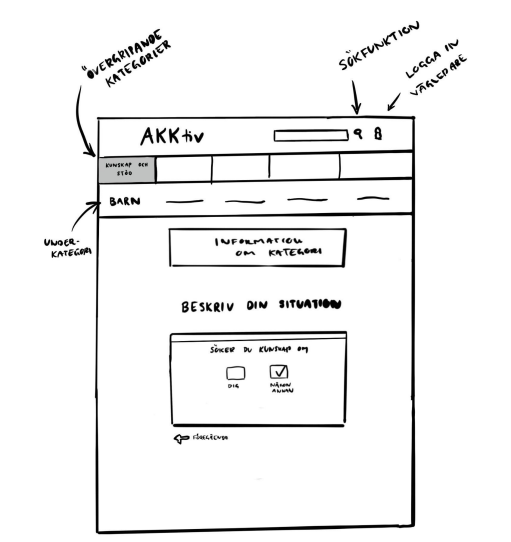
Quick sketches allowed me to explore layout concepts, test structure, and think visually about the user flow without getting caught up in the details.
Wireframing
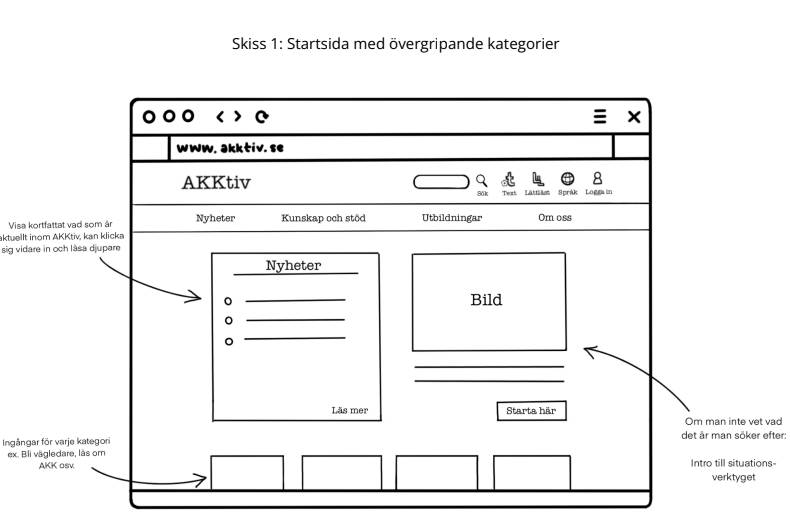
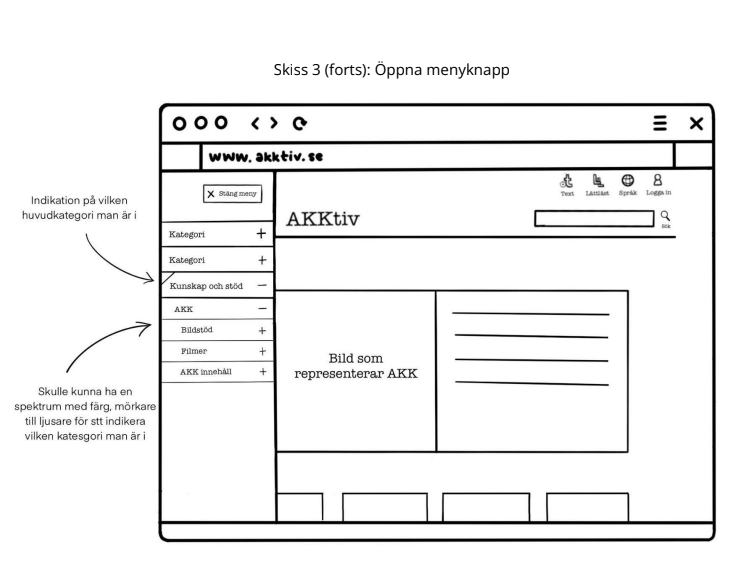
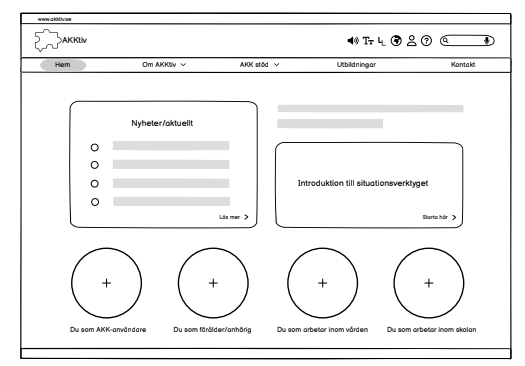
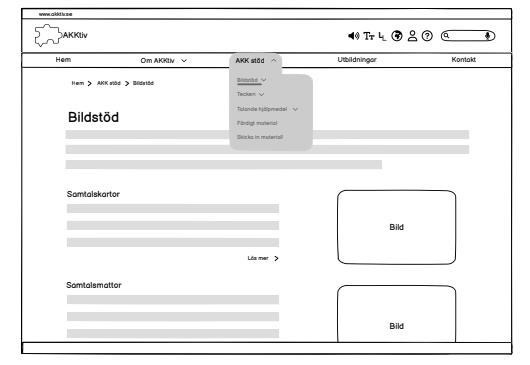
Once core ideas were formed, I moved into wireframes — focusing on structure, hierarchy, and functionality to map out key pages of the site. These wireframes laid the foundation for further design and feedback.
04. CREATION
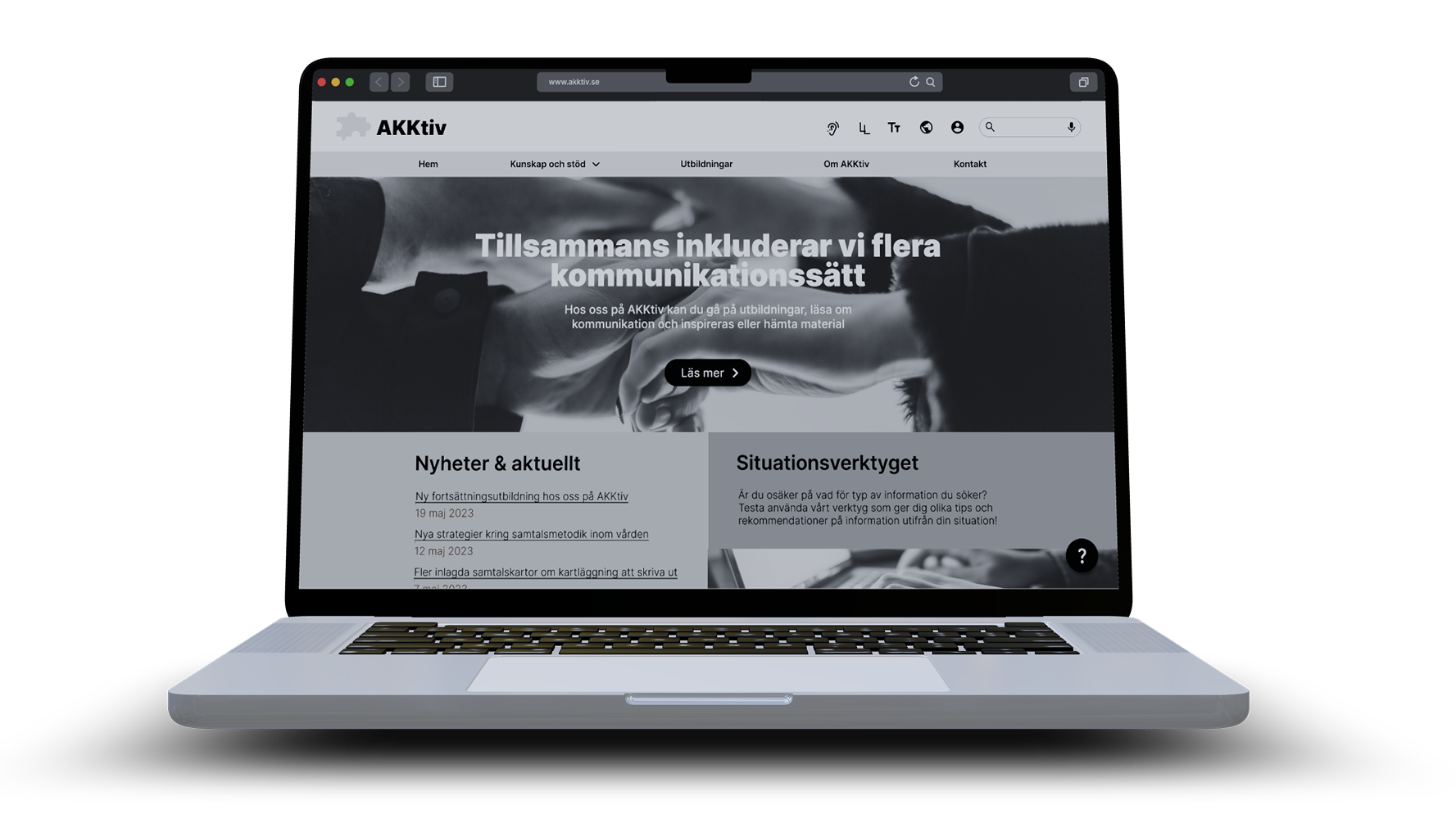
The final step was turning wireframes and sketches into a mid-fidelity prototype using Figma. The prototype included 7 unique pages and interactive functions, focused on both usability and clarity.
To help users quickly understand AKKtiv’s mission, we added a clear header that summarizes the unit’s purpose, with a direct link to read more. This was essential for giving both new and returning users quick context.
We also introduced a news section to help users stay up to date with the latest from the AKKtiv initiative. Beside it, I added a custom-built support tool — designed to help users who don’t know exactly what to search for.
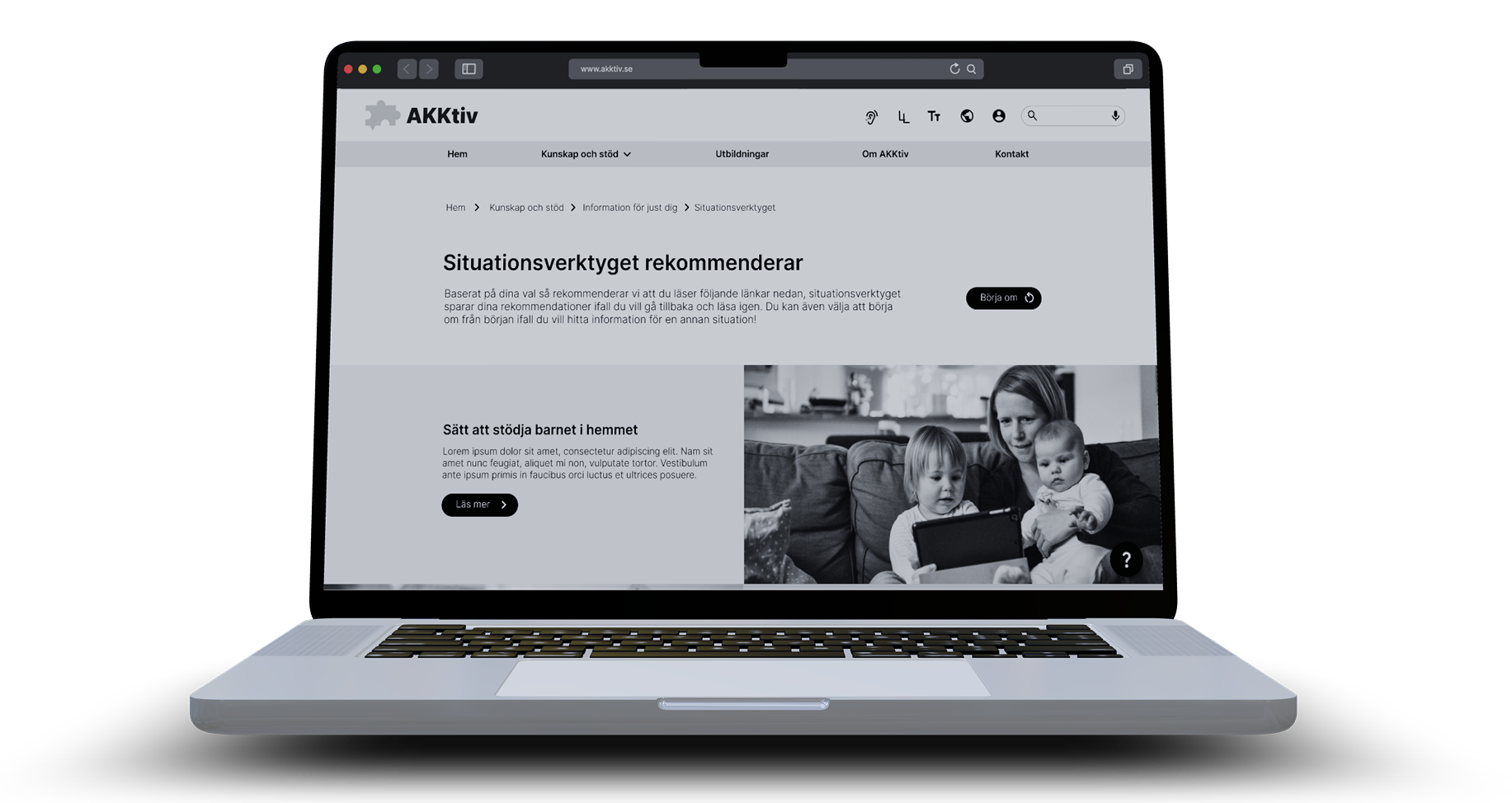
One of the main challenges identified during research was information overload and lack of guidance for new users. As a response, I conceptualized the Situation Tool — a smart filter system where users can select options like:
Who they are supporting
The person’s age
Where support is needed
Their own role (e.g. parent, teacher, caregiver)
The tool would then return relevant content based on their unique situation, helping guide them to the most helpful resources.
05. LEARNINGS
One key learning was just how complex accessibility design can be. It’s not always clear if a solution truly works until it’s tested by the people it’s intended for. Unfortunately, due to time constraints, we weren’t able to validate the final design with end users — something I would prioritize in a future iteration.
I also grew personally in how I approach collaboration. I learned the importance of speaking up for my ideas and being confident in presenting them — while also staying open to feedback and having constructive discussions to find the best solution together.