A website that educates about how to support individuals with communication difficulties
Social Robots & Research
Exploring the role of first impressions in human–robot interaction • 7 min read
Bouncing Image Arrow
01. OVERVIEW
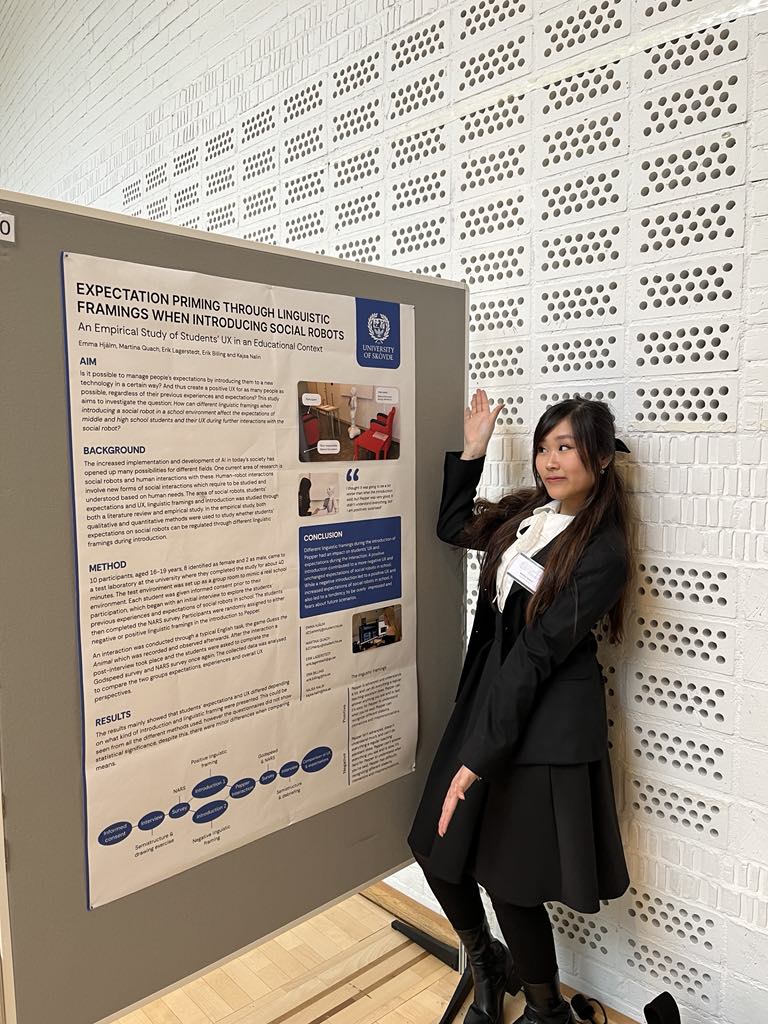
As AI and social robots become more integrated into daily life, I’m interested in how design and communication shape our interactions with them. This project explores how different linguistic framings during the introduction of a social robot influence secondary school students’ expectations and experiences. Using mixed methods and the robot Pepper, I focused on understanding user perception in an educational context—bridging technology and human-centered design.
This work was selected for poster presentation at Swecog 2024 – the annual conference of the Swedish Cognitive Science Society. The study contributed to ongoing discussions on human-robot interaction by exploring how linguistic framing shapes students’ expectations and user experiences with social robots in educational settings.
02. RESEARCH
We reviewed literature on social robots, UX, and human-robot interaction, identifying a gap in how student expectations are shaped before first contact. Prior research emphasized the novelty effect and media bias as key influences on user expectations.
The literature study showed a lack of empirical research focusing on older students’ (ages 15–19) interactions with social robots. Most studies generalize children as one group, ignoring the unique needs of adolescents. It also found that social robots are rarely age-adapted, which can limit their effectiveness in schools. Expectations and prior experiences play a key role in shaping interactions, but little research explores how linguistic framing during the robot’s introduction might influence these. This highlights a clear gap and the need for further studies on how framing can affect user experience and acceptance.
"How can different linguistic framings during the introduction of a social robot in a school environment affect lower and upper secondary school students’ expectations and their user experiences when interacting with the social robot?"
03. DESIGN
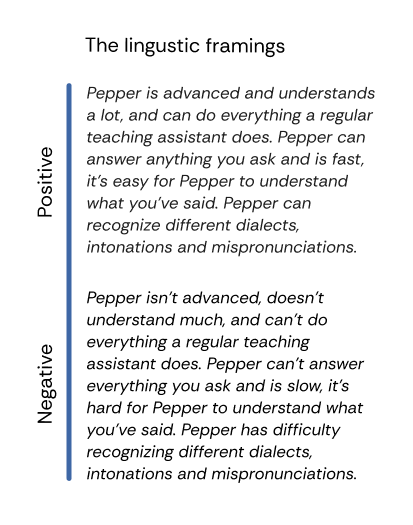
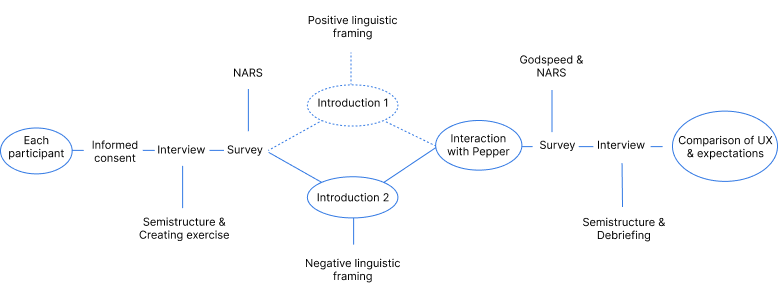
We designed an experiment using two types of verbal introductions for Pepper—one positive and one negative—to manipulate expectations. The interaction was set up as a familiar classroom game, “Guess the Animal,” within a simulated school setting.
Pepper was programmed using GPT-3.5 via Visual Studio Code to follow structured prompts and support the game interaction. Students (aged 16–19) engaged with Pepper after receiving one of the two introductions. We collected data via interviews, observations, and standardized UX questionnaires (NARS, Godspeed).
Different Introductions
The Game
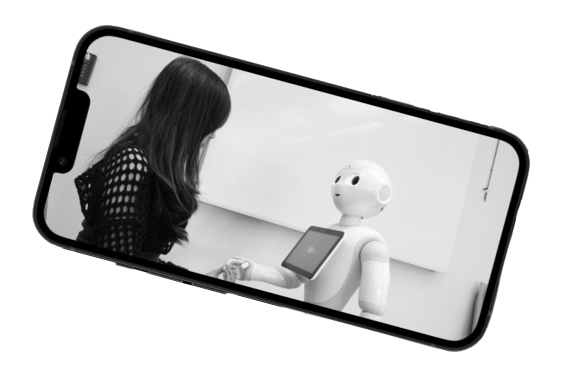
The activity involved an English language game called Guess the Animal, played in a simulated school setting. Before each session, the technician manually activated Pepper’s prompts to begin the interaction. Pepper introduced itself as a teaching assistant and explained the game rules to the participant. The robot would “think” of an animal, and the student asked yes/no questions to figure out which animal it was. If needed, Pepper encouraged the participant by offering hints. Once the correct animal was guessed, the technician deactivated Pepper’s interaction function to transition to the next phase of the study.
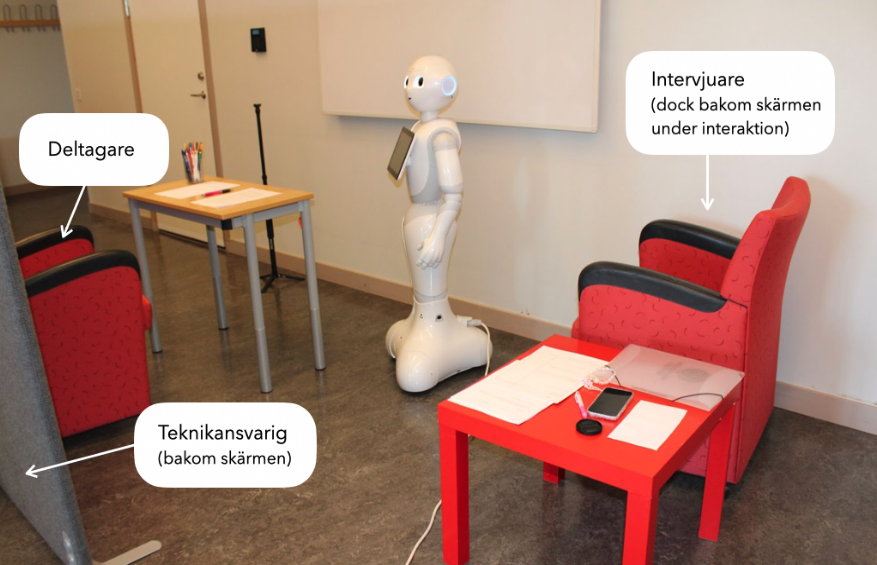
The Setting
The study took place in a simulated school environment resembling a typical classroom. Students aged 15–19 interacted with a social robot after receiving different linguistic framings during its introduction. This controlled setting allowed for consistent observation of their expectations and user experiences, using interviews, observations, and surveys for data collection.
Incentives
Participants received goodie bags with snacks and stationery as a thank-you for their time. This helped boost interest and participation in the study.
04. RESULTS
Observations revealed that while all students were initially curious about Pepper, those in the positive framing group showed more frustration—through body language and verbal requests for help—than those in the negative framing group, who appeared more relaxed.
Triangulating interviews, surveys, and observations showed shifts in students’ expectations before and after interaction. Some students expressed concerns about introducing robots to younger children in interviews, but surveys indicated generally low negative attitudes that remained stable or improved after interaction.
Notably, observed frustration was greater than what students reported. In contrast, students in the negative framing group exhibited more relaxed behavior and reported more positive feelings, matching their verbal feedback.
Both qualitative and quantitative data showed that linguistic framing during introduction affects students’ expectations and experiences with the social robot. A positive introduction led to more negative experiences, while a negative introduction resulted in more positive experiences and expanded students’ views on social robots. Each approach has pros and cons that should be considered ethically based on context.
Impact of Linguistic Framing: How the way a robot is introduced significantly shapes users’ expectations and experiences, demonstrating the power of language in human-robot interaction.
Age-Specific Interaction Needs: Adolescents (15–19 years) interact differently with social robots compared to younger children, highlighting the importance of age-adapted design and introduction.
Mismatch Between Expressed and Observed Behavior: Observations revealed more frustration than students reported, underscoring the value of combining qualitative and quantitative methods for a fuller understanding.
Ethical Considerations in Framing: Positive vs. negative framing can influence experiences differently, so ethical reflection is needed to choose the most appropriate approach in educational settings.
Holistic Research Approach: Triangulating interviews, surveys, and observations strengthens the reliability of findings and offers a comprehensive view of user experiences.
Practical Implications: Insights from the study can guide educators and developers on how to introduce social robots to maximize positive engagement and realistic expectations.